
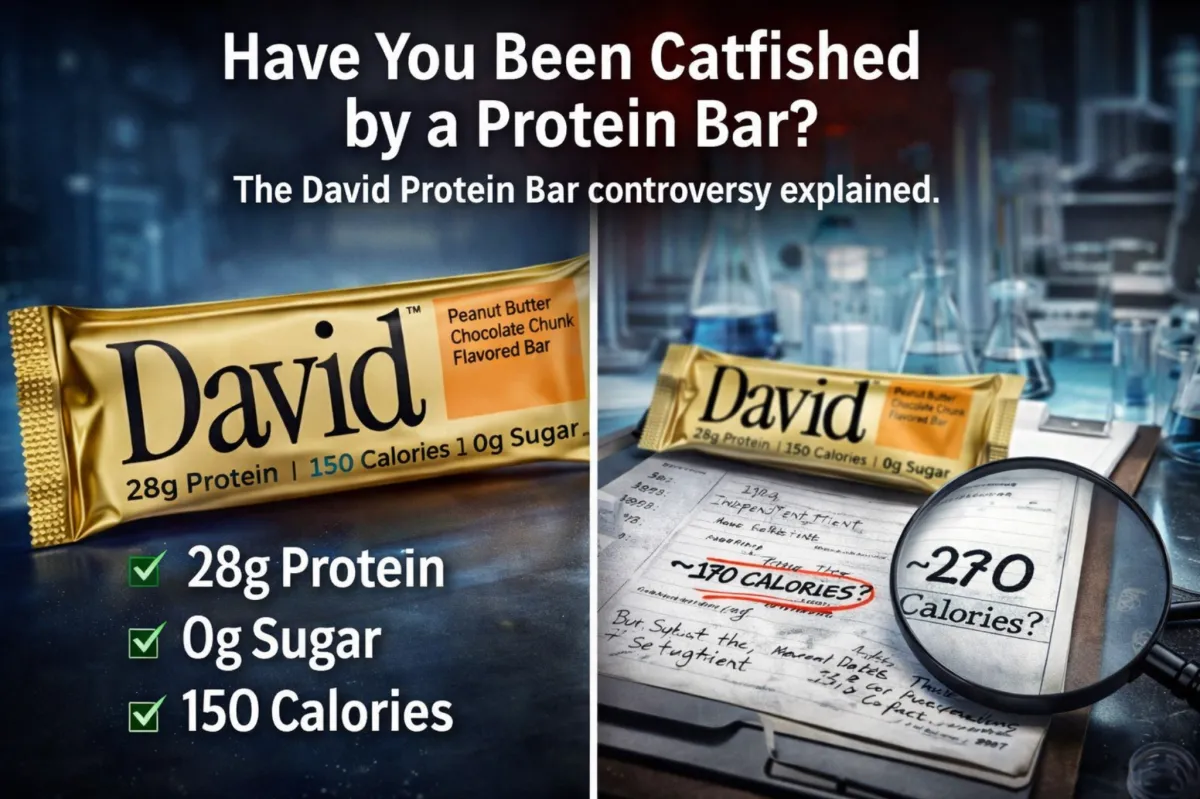
David Protein Bar Lawsuit: Have We Been Catfished by the Macros?
The fitness world might have just had its biggest protein-bar scandal since someone first tried to convince us that a brownie-flavored bar could taste like actual brownies.
If you’ve been on fitness TikTok, Instagram, or browsing the protein snack aisle at Target, you’ve probably seen David Protein Bars. The marketing was irresistible:
✅ 28g protein.
✅ 0g sugar.
✅ Only 150 calories.
For anyone trying to get lean, that macro profile looked like the nutrition-label version of a dating profile that’s just a little too perfect.
And that’s exactly why people are now asking… was it too good to be true?
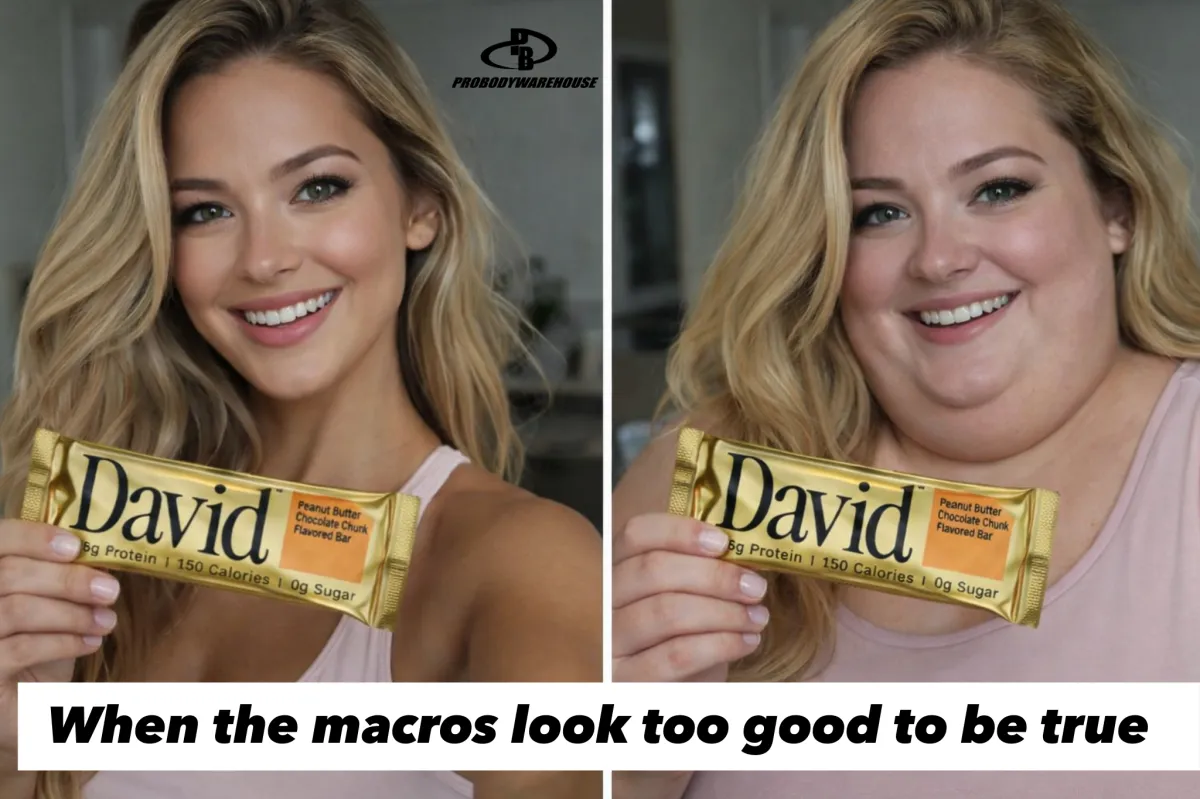
The Lawsuit That Started the Drama
In January 2026, a class-action lawsuit was filed alleging that independent testing found the bars actually contained 268–275 calories per bar, significantly higher than the 150 calories listed on the label. The fat content was also reportedly much higher than claimed.
To put that into perspective:
**Label: 150 calories
**Testing: ~270 calories
That’s not a small rounding error — that’s the difference between a snack and a small meal.
Naturally, the internet responded exactly how you’d expect: memes, outrage, and about 500 variations of the phrase “we’ve been scammed.”
The Ingredient Behind the Magic Trick
At the center of the controversy is an ingredient called EPG (esterified propoxylated glycerol).
EPG is basically a fat substitute designed to behave like fat in food — creamy, rich, and satisfying — but your body doesn’t absorb most of it.
Imagine your body is like a piggy bank that collects coins (calories).
Most foods are like real coins.
When you eat them, your body puts those coins in the piggy bank and can use them later for energy.
Fat is like a big $9 coin — it adds a lot of energy quickly.
But EPG is like those chocolate coins wrapped in gold foil.
They look like real money.
They feel like real money.
But when your body tries to spend them, it realizes:
"Wait… this is just chocolate!"
So instead of adding the full amount of energy, your body can’t really use most of it.
That’s why companies say EPG contributes far fewer calories than normal fat, even though it still helps make food taste rich and creamy.
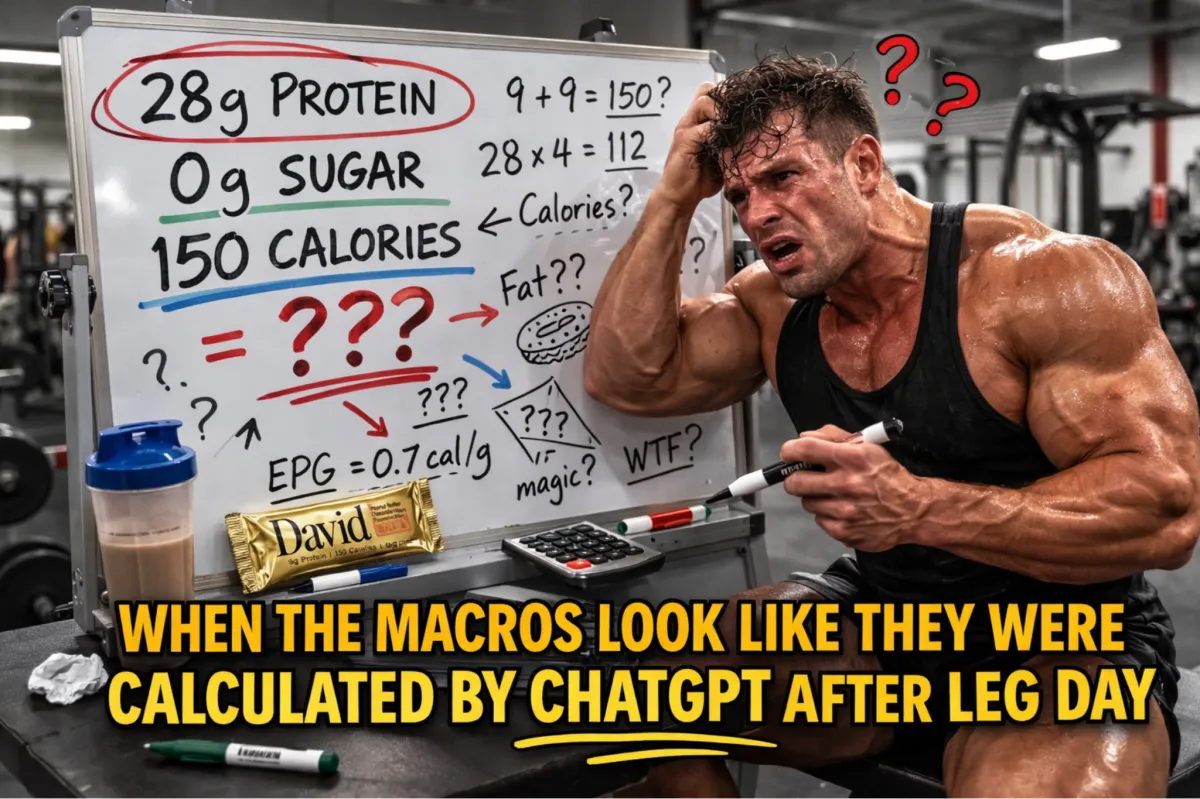
Why This Is Part of the Lawsuit
Some scientists say the bar still contains the full energy when tested in a lab, which is why certain tests show higher calories.
But the company argues that because your body doesn't absorb that energy, the label should count metabolizable calories instead.
Think of it like this:
🔬Lab test: measures all the energy in the bar
🔬Label: measures the energy your body actually absorbs
And right now, the courts are basically deciding which way of counting calories should win.
Why This Matters (Beyond the Drama)
The real takeaway here isn’t just about one protein bar.
It highlights something industry veterans have known for years:
Nutrition labels can get complicated when novel ingredients are involved.
Especially when companies start using:
👉 fat substitutes
👉 resistant starches
👉 modified fibers
👉 or ingredients like EPG
The numbers on the front of the wrapper can start looking… well… suspiciously perfect.
⭐️⭐️⭐️⭐️⭐️-Star Rated Enclomiphene. Shop Now
Final Thoughts
Having spent over two decades in the sports nutrition industry, I’ve learned that the truth about nutrition labeling is often far less dramatic than the headlines make it sound. Modern food science has introduced ingredients that behave very differently in the body compared to traditional fats, sugars, and carbohydrates. When those ingredients show up in products, the math behind the label can look unusual — but that doesn’t necessarily mean it’s incorrect.
At the end of the day, the courts will decide whether David’s labeling method is appropriate under current regulations. Until then, this situation mostly serves as a reminder that nutrition labels, especially on highly engineered foods, aren’t always as simple as they appear.
One thing is certain though — in the fitness industry, if a protein bar ever looks too good to be true, it will eventually end up in a courtroom…
Frequently Asked Questions About the David Protein Bar Lawsuit
1. What is the David Protein Bar lawsuit about?
The David Protein Bar lawsuit claims the bar may contain significantly more calories than the 150 calories listed on the label. Plaintiffs argue that independent testing found higher calorie counts, while the company maintains that its labeling follows FDA rules for metabolizable calories.
2. Is the David Protein Bar really 150 calories?
According to the company, the bar contains about 150 metabolizable calories. The controversy comes from how calories are calculated when ingredients like EPG fat are used, which the body does not digest the same way as traditional fat.
3. What is EPG in protein bars?
EPG (esterified propoxylated glycerol) is a modified fat substitute that mimics the texture of fat but is largely not absorbed by the body. Because of this, it contributes far fewer calories than conventional fat.
4. Why do some tests show higher calories in David Protein Bars?
Some laboratory tests measure the total energy contained in food using methods like bomb calorimetry. However, nutrition labels are based on metabolizable calories, which represent the energy the body actually absorbs.
5. Are fat substitutes like EPG approved by the FDA?
Yes. EPG has received FDA recognition for use in certain food products. However, its unusual metabolic properties can make calorie calculations more complex than those of traditional ingredients.
6. Why do some protein bars have extremely low calories?
Some protein bars use specialty ingredients such as fiber blends, sugar substitutes, and fat alternatives like EPG. These ingredients allow manufacturers to create bars with high protein but fewer digestible calories.
7. Are protein bar calorie counts always accurate?
Nutrition labels must follow FDA guidelines, but the way calories are calculated can vary depending on the ingredients used. Novel ingredients may result in calorie numbers that appear unusual compared to traditional foods.
8. Who created the David Protein Bar brand?
The brand is associated with entrepreneur Peter Rahal, who previously co-founded RXBAR, a protein bar company that was later sold to Kellogg for hundreds of millions of dollars.
9. Should consumers avoid protein bars with EPG?
EPG is designed to reduce digestible calories while maintaining the texture of fat. Consumers who are unsure about novel ingredients should review ingredient lists and consult reliable nutrition sources.
10. What does the David Protein Bar controversy mean for the supplement industry?
The case highlights the growing use of advanced food science ingredients in protein products and the challenges of explaining complex nutrition labeling to consumers.

© 2026, ProBody Warehouse Corporation. All rights reserved.
LOCATIONS IN SAN DIEGO, CA


